
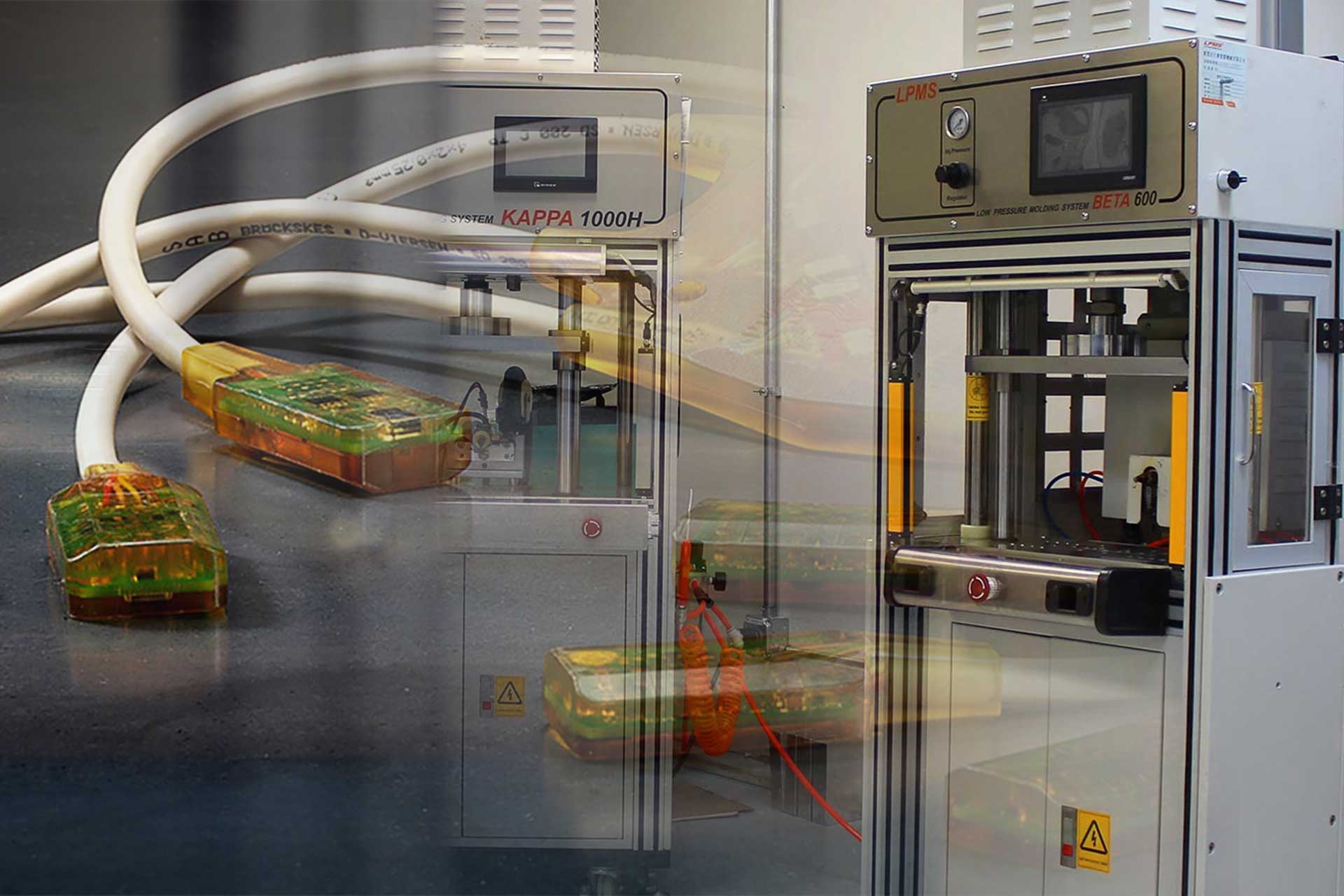
Low Pressure Moulding and the Process...
Low pressure moulding (LPM) is a specialised manufacturing technique increasingly used in electronics manufacturing in Australia to encapsulate and protect sensitive components. It sits between conventional high-pressure injection moulding and traditional potting or casting processes, offering a reliable, cost-effective, and environmentally conscious alternative for protecting printed circuit boards (PCBs), cable harnesses, connectors, sensors and other electronic assemblies.
At its core, the low pressure moulding process uses thermoplastic polyamide hot melt materials, often under the TECHNOMELT® brand, which are heated until molten and then injected into a mould set at relatively low pressures. This protects delicate electronic parts from moisture, dust, vibration and mechanical stress without the high forces involved in conventional injection moulding that can damage fragile electronics.
The Manufacturing Process
One of the key differentiators of low pressure moulding compared with potting or conformal coating is its simplicity and speed. Rather than requiring multiple steps and lengthy curing times, LPM typically involves three core stages:
- Insert Electronics – Electronic parts such as PCBs or cable assemblies are placed directly into a custom mould set.
- Mould – Molten low pressure material is injected into the mould at low pressure. The process takes roughly 30 seconds to 2 minutes, rapidly forming a protective encapsulation around the components.
- Test Device – Once the part has cooled, it can be tested and handled immediately, eliminating the need for prolonged curing or additional processing stages.
This efficiency stands in contrast to traditional potting, which can involve up to eight separate steps and curing times of 24–72 hours. Low pressure moulding replaces these with a streamlined workflow that significantly reduces cycle time, labour and work-in-process inventory.
Why is Low Pressure Moulding Gaining Traction in Australia?
Australian manufacturers are adopting LPM for several reasons.
Design Flexibility
The process allows engineers to rethink how protection is integrated into product design, including enabling the encapsulation itself to act as the enclosure rather than requiring separate housings.
Cost and Material Efficiency: Because low pressure moulding uses less material and consolidates multiple operations into a single step, it can reduce the Bill of Materials (BOM) count and associated costs.
Environmental Advantages
Excess material such as sprues can be recycled, and the process produces minimal waste. It also avoids harmful fumes associated with some potting or coating methods.
Equipment Options
Tarapath supplies a range of dedicated low pressure moulding machines and peripheral systems suitable for prototype to high-volume production, allowing Australian electronics manufacturers to scale efficiently.
Low Pressure Moulding represents a modern encapsulation solution that enhances product durability, simplifies production, and supports sustainable manufacturing practices in Australia’s electronics sector.
If you have a project you would like to discuss or if you have questions about the manufacturing process using Low Pressure Moulding please contact Tarapath today Ph: +61 3 9269 6200
 The Refinery